Showing posts with label Reading. Show all posts

2.04.2010

Informed Quoters or Informed Readers?

In his article, "The Problem of Evangelical Biblical Illiteracy" David R. Nienhuis expresses his concern regarding Biblical illiteracy among those who claim to hold the Bible in high regard. In his opinion, knowing a few isolated Bible verses or being able to answer trivia questions should not be the goal of Christian education. He writes:
Knowing that Jesus was born in Bethlehem will not in and of itself empower them to speak the language of faith. Satan's use of Scripture in tempting Jesus is clear indication that a merely cognitive level of biblical literacy does not automatically result in the formation of a Christian character. To make a real difference in people's lives, biblical literacy programs will have to do more than simply encourage believers to memorize a select set of Bible verses. They will have to teach people to speak the language of faith...Biblical literacy programs need to do more than produce informed quoters. They need to produce transformed readers.
I believe that Nienhuis is correct. While I believe that Bible memorization is a good part of educating believers, it does not exhaust the task. Here are a couple of suggestions for helping people become transformed readers of Scripture.
  • Teach the Bible as a Story - From beginning to end, the Bible tells one grand story. The plot-line of the Bible moves from Creation to Fall to Redemption to Consummation. We must relate the many stories found within Scripture to the one, unified Story. In other words, we must not treat the Bible as a collection of unrelated stories; every story is part of the drama of redemption. (Recommended Resource: The Jesus Storybook Bible)
  • Ask the "So What?" Question - The goal of reading Scripture is not simply to make us more informed or knowledgeable. Facts are good, but they are not enough--even the demons believe certain facts about God (James 2:19). The things that we learn in the Bible regarding God, ourselves, and the world should lead us to action. For example, the proper response of the one who learns of his or her sinful condition and of Jesus' death and resurrection, is faith and repentance. Every time we read Scripture we should ask the "So what?" question -- "So, what should my response be to what God has revealed to me in His Word?"

12.31.2009

2009 Reading Reflections

Well, 2009 is almost over so I thought that I'd post my readings for the year. As usual, some books were better than others. I read some of these books because they were requirements for seminary, while I read other for different reasons. I'm happy to say that a few fiction works finally made their way into my reading list. I really do love to read fiction, but I usually don't have time to fit them in with all of the non-fiction that I have to read. I hope that during 2010 I'll be able to keep this trend going. I'd like to finish the Harry Potter series, and then find another fantasy series to jump into. (Recommendations anyone?)

Of the books that I read, here are a few that I really enjoyed:
  • Salvation Belongs to Our God by Christopher J.H. Wright - In this book, Wright begins with the end; meaning, he takes us to the book of Revelation where we see the vision of people from every tribe, tongue, and nation gathered and worshiping Go. Then Wright shows how God's "global vision" is everywhere throughout the OT and NT. (And in turn, our vision and mission must likewise be to see God's kingdom spread globally.) He also helps us to have a deeper understanding of "salvation language" as we read the Scripture.
  • Samson and the Pirate Monks by Nate Larkin - This autobiographical book about Larkin's struggle with sin (i.e. sexual sin in particular) was interesting, humorous, gritty, and honest. Every man should read this book. Larkin reminds us of the vital role that Christian community plays in each of our lives as we seek to live for Jesus.
  • Ministires of Mercy by Timothy Keller - In this book, Keller helps to remind us that showing mercy is the responsibility of every believer, every church. It is not optional. Keller helps to answer questions that always seem to arise as we talk about helping the poor and needy: Is it proper to distinguish between the "deserving" and "undeserving" poor? What is the relationship between word and deed, evangelism and mercy?
Here's the complete list of book readings for the year:

12.16.2009

Neither Left Nor Right

The ideology of the Left believes big government and social reform will solve social ills, while the Right believes big business and economic growth will do it. The Left expects a citizen to be held legally accountable for the use of his wealth, but totally autonomous in other areas, such as sexual morality. The Right expects a citizen to be held legally accountable in areas of personal morality, but totally autonomous in the use of wealth. The North American "idol"--radical individualism--lies beneath both ideologies. A Christian sees either "solution" as fundamentally humanistic and simplistic
-Timothy Keller, Ministries of Mercy

8.07.2009

Praising Themselves, Obscuring His Glory

"God cannot bear with seeing his glory appropriated by the creature in even the smallest degree, so intolerable to him is the sacrilegious arrogance of those who, by praising themselves, obscure his glory as far as they can."
-John Calvin, as quoted in Humilty: True Greatness, 33.

8.06.2009

Gnosticism and the Church

I'm becoming more and more convinced that Gnostic thought is a big problem within the church today. (Of course, Gnostic thought within the church isn't new. The New Testament writers and the early church often fought against this heresy). So, what is Gnosticism, and how is it influencing the church? Read more here.

Pliny's Test

In his book The Christians as the Romans Saw Them, Robert Louis Wilken writes about a test that Pliny used in order to determine whether or not people were Christians. For those who denied being Christians, how could Pliny know if they were telling the truth? In order to combat this problem, Pliny developed the following test:
He had statues of the emperor Trajan and of the Capitone gods--Jupiter, Juno, and Minerva--brought into the room. Those who had already admitted that they were Christians he sent off to be executed, as he had done with the first group. Those who denied the charge he asked to repeat after him a "formula of invocation to the gods" and "to make an offering of wine and incense" to Trajan's statue. He also ordered them to "revile the name of Christ" (25).
After reading this passage, 1 Corinthians 12:3 came to my mind: "Therefore I want you to understand that no one speaking in the Spirit of God ever says “Jesus is accursed!” and no one can say “Jesus is Lord” except in the Holy Spirit" (ESV). May the Spirit give each of us boldness as we stand against a world that wants us to revile our Savior. Let us stand firm in the faith and proclaim along with Peter and John: “Whether it is right in the sight of God to listen to you rather than to God, you must judge, for we cannot but speak of what we have seen and heard" (Acts 4:19-20, ESV)

7.23.2009

Crawling Out of a Deep Hole

While on vacation I decided to leave behind all...well...most of my seminary work. While that decision allowed me to more fully enjoy time with my family, now I'm in the process crawling out of a deep hole that is filled with books, papers, and lectures. I'm just taking it one task at a time. Of course, getting all of this work finished would be easier if that is all I had to do, but I've got a family to love and a church to serve.My plan is to finish The Creative Word: Canon as a Model for Biblical Education within the next few hours. Then, I'll begin making my way through The Christians as the Romans Saw Them. That will still leave me with two others to finish (but certainly not today): Revelation and Reason: New Essay's in Reformed Apologetics and Education That is Christian. Hopefully I'll be poking my head out of the hole soon!

7.21.2009

For the Kids and You

This book came in the mail yesterday, so I started reading it with Alora and Adalynne. They loved it! Definitely my top pick for a children's Bible. But don't be fooled...it's a great read for adults too. Buy it here.

7.14.2009

Reading Calvin

A few days ago marked the 500th birthday of John Calvin. Many scholars, pastors, and others took time to celebrate in Geneva. Well, I certainly didn't have the time (or resources) to make my way to Geneva. Instead, I decided to celebrate by reading through some of Calvin's sermons. Sadly, I believe that many people have the wrong idea about Calvin. Some think of Calvin as an unloving and dry theologian, yet Calvin's love for God and concern for God's people is evident throughout his writings. His theology is certainly deep, but it isn't divorced from an equally deep piety. Here's an excerpt from the sermon I read this morning on Deuteronomy 4:44-5:3:
For if God only demanded his due, we should still be required to cling to him and to confine ourselves to his commandments. Moreover, when it pleases him by his infinite goodness to enter into a common treaty, and when he mutually binds himself to us without having to do so, when he enumerates that treaty article by article, when he chooses to be our father and savior, when he receives us as his flock and his inheritance, let us abide under his protection, filled with his eternal love for us....When the living God humbles himself to that extent, I beg of you, should we not be more than ingrates if we did not humble ourselves before him and abstain from all pride and arrogance? (taken from John Calvin's Sermons on the Ten Commandments by Benjamin W. Farley, 45-46)

7.13.2009

Listening to Theology

In the old days, when there was less education and discussion, perhaps it was possible to get on with a very few simple ideas about God. But it is not so now. Everyone reads, everyone hears things discussed. Consequently, if you do not listen to Theology, that will not mean that you have no ideas about God. It will mean that you have a lot of wrong ones--bad, muddled, out-of-date ideas.
--C.S. Lewis, Mere Christianity, 3.1

6.16.2009

Re-Jesus

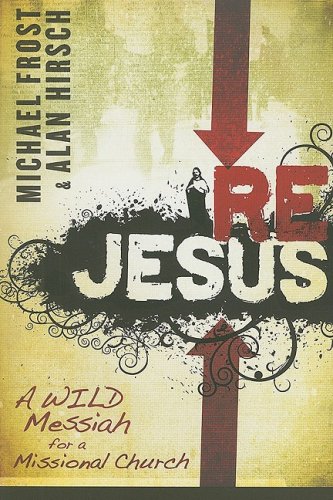
In their latest book, ReJesus: A Wild Messiah for a Missional Church, Michael Frost and Alan Hirsch begin by noting that "the name of Jesus has been invoked as central to movements that do not seem to be in accord with the Jesus we find in the pages of the Gospels" (4). The solution, according to Frost and Hirsch, is for the Church to be "reJesused." Meaning, the Church must continually refocus and remember that Jesus is central to who we are and what we do.

While reading ReJesus there were times when I found some of Frost and Hirch's claims to be pejorative and unhelpful. For instance, they write off the Nicene Creed as "flowery" and claim that "Paul has nothing to do with this airy doctrinal language." Granted, the language is different from Paul's, but it isn't opposed to it. Creeds certainly have an important role to play in helping the Church think and believe rightly about Christ, salvation, etc.

Yet, disagreements aside, Frost and Hirsch do helpfully remind us that we must continually be "looking to Jesus, the founder and perfecter of our faith" (Hebrews 12:2). For each of us that follow Christ as our Lord and Savior, it is not unnecessary for us to be reminded that Jesus Christ is central to everything we say, do, and think. According to Paul in 2 Corinthians 5:20, we are "ambassadors for Christ, God making his appeal through us." As His ambassadors, it is vital that we adequately represent our Savior as He truly is. And one of the best ways that we can do this is by meeting Him again and again as He is given to us in the Scriptures. In other words, we need to be ReJesused.


6.11.2009

Restless

You stir man to take pleasure in praising you, because you have made us for yourself, and our heart is restless until it rests in you.
-From St. Augustine's Confessions, 1.1

4.10.2009

No Creed But Christ?


Any attempt to confess what one believes is a creed. Saying "no creed but Christ" is just as much a creed as a written statement is a creed. You should see the self-contradictory problem with saying "no creed but Christ." Even though it is shorter and rather ill-conceived it is nonetheless a confession or creed. Hence, rather than liberating themselves from the snares of creeds, those who say this have actually entangled themselves in a poorly conceived one.

The Scriptures say in James 2:19, "You believe that there is one God. You do well. Even the demons believe--and tremble! It is never enough to say that you "believe." The real question remains: what do you believe about Jesus?
--Faith of Our Fathers: A Study of the Nicene Creed by L. Charles Jackson, p.2

(You can read the first chapter from this book here.)

4.03.2009

Those Who Help Themselves

So, where do you think that the phrase--"Heaven helps those who help themselves"--comes from?

While quite a few people would guess that it comes from the Bible, such a guess would be incorrect. The phrase is actually derived from the fable "Hercules and the Wagoner," one of Aesop's Fables. In the fable, a man's wagon gets stuck in the mud. So, the man begins to cry out for Hercules to help him. Eventually Hercules shows up and says, "Put your shoulder to the wheel, man, and goad on your horses, and then you may call Hercules to assist you. If you won't lift a finger to help yourself, you can't expect Hercules or anyone else to come to your aid." (Aesop's Fables, #102)

3.18.2009

"Help!"

God, in his grace, has used addiction to shatter my moralistic understanding of the Christian faith and force me to accept the gospel. I am not a faithful man. That's why I need a Savior. I cannot live victoriously on my own. That's why I need a Helper and brothers. I cannot keep my promises to God--the very act of making them is delusional--but God will keep his promises to me.

As a Christian, I am perpetually reduced to the role of a supplicant. No more can I offer God a bargain, his favor in exchange for my faithfulness, or go toe-to-toe with him, demanding payment for years of service. But when I approach him humbly, as a restored prodigal son, he responds with overwhelming generosity to my requests for aid.

No fancy prayers are required. In fact, God finds fancy prayers repugnant. He loves it, however, when I acknowledge my need and my belief in his benevolence with a simple one-word prayer:

"Help!"

-Nate Larkin, Samson and the Pirate Monks, p. 132

3.11.2009

Intriguing Title

This book isn't out yet, but it certainly has an intriguing title.

3.08.2009

Prodigal God?

Many people are familiar with Jesus' parable about the prodigal son. In reference to this wayward son, the word "prodigal" takes on a negative connotation. So, some people may wonder why Tim Keller titled his most recent book The Prodigal God. Go here to find out more about the title of the book.

And while your at it, buy the book here for 40% off! It's great.

2.25.2009

Noisy Inside: Anti-Psalm 131

Sometimes, it's helpful to think in opposites. In Psalm 131, we encounter someone who has found true peace: a quieted soul who hopes in the LORD. In the chapter "Peace, Be Still" in his book, Seeing With New Eyes, David Powlison shows what the opposite of this Psalm looks like:
Self,
my heart is proud (I'm absorbed in myself),
and my eyes are haughty (I look down on other people),
and I chase after things too great and too difficult for me.
So of course I'm noisy and restless inside; it comes naturally,
like a hungry infant fussing on his mother's lap,
like a hungry infant, I'm restless with my demands and worries.
I scatter my hopes onto anything and everybody all the time.
If we're honest, we can find ourselves living out"anti-psalm 131" instead of Psalm 131. We become focused on ourselves instead of our God. Brothers and Sisters, let us instead find peace and rest in our God. Let us hope in the LORD, both now and forever.

O Lord,
my heart is not lifted up;
my eyes are not raised too high;
I do not occupy myself with things too great and too marvelous for me.
But I have calmed and quieted my soul,
like a weaned child with its mother;
like a weaned child is my soul within me.

O Israel, hope in the Lord from this time forth and forevermore. -Psalm 131 (ESV)

1.12.2009

A Yearly Read

There are a few books (besides the Bible) that I like to read each year. This one is certainly worth reading again and again.

12.30.2008

President Bush's Reading List

Well, it seems that President Bush enjoys reading as much as I do (HT: Challies). Though President Bush and I certainly didn't read the same type of books, one book did make it on both of our reading lists: the Bible. Check out this interesting article for more on Bush's reading competition with Karl Rove. I wonder what Obama read this year?