Showing posts with label Christian Year - Advent. Show all posts
Showing posts with label Christian Year - Advent. Show all posts
12.25.2008
"Merry Christmade"
No matter how many times we've told Alora that the holiday on December 25th is called "Christmas", she still calls it "Christmade" Well, I think that "Christmade" is a perfectly fine name since Christ is the one who makes our celebration possible. So, from the Ashley family we wish you all a merry Christmade. May the good news of Jesus Christ--his birth, death, resurrection and second coming--be on your hearts and minds.

Reflection and Anticipation
For most of us, the time between Thanksgiving and Christmas is a season of hustle and bustle. Our calendars usually filled up with scheduled family visits, parties, special church services, and a host of other seasonal happenings. (Since it is Christmas Day today, you're probably enjoying some of those event now!) Yet, in the midst of all of these activities it is easy for us to get so wrapped up in our calendar appointments that we forget to place sustained focus on the birth of our Savior Jesus Christ. This is not to say that there should not be time for family and friends during this season; rather, it is simply a recognition that we can easily become so overwhelmed with our “obligations” that we miss a great opportunity to meditate on one of the most important events in human history: the first coming of God’s Son. Yet, this problem is not unique to our particular stage in world history; Christians have always faced the temptation to focus more on the here-and-now than on the One who transcends all time. In order to combat these temptations and to help focus on the gospel, Christians throughout the history of the Church have chosen to order their time around different seasons, beginning with Advent and ending with Easter and Pentecost. Advent (which means “coming” or “arrival”) marks the beginning of the Christian Year in which we celebrate the first coming of Jesus and look forward to His second coming. As we focus on these two “comings” of Jesus, we are encouraged to participate in both reflection and anticipation.
First, Advent is marked by reflection as we look back upon the progress of redemption. We are encouraged to remember the promise of a righteous “seed” that was given in the garden of Eden after Adam sinned (Genesis 3:15). We remember the covenant made with Abraham in which he was given a promise of an innumerable offspring. We look back to the exodus of God’s people from slavery out of Egypt. We remember Israel’s desire for a King who would reign with righteousness and strength to deliver and sustain His people. We read the prophecies of Isaiah, foretelling the Messiah who would bring peace and justice. And at last, we are able to reflect upon the Messiah—Jesus—who came and dwelt among us. As we reflect upon and celebrate his incarnation, we get to share in the rejoicing of those that saw Him arrive. We share in the joy of the world, the glory of the angels’ message, and the wonder of the shepherds as they heard the good news.
Second, Advent reminds us that our faith is founded on not only what Jesus did in the past, but also what He will do in the future. As Christians, we should forward to Christ’s second coming when we will see our King coming in glory and power. We will finally be able to see Him face to face (1 Corinthians 13) and our salvation will be complete! Yet, His second coming will also bring judgment on the world that has rejected Him. So our celebration is mixed with sobriety. Those of us who bear the name of “Christian” should not only praise God
for our salvation, but we must also be His witnesses and pray for a world that has yet to embrace Him.
First, Advent is marked by reflection as we look back upon the progress of redemption. We are encouraged to remember the promise of a righteous “seed” that was given in the garden of Eden after Adam sinned (Genesis 3:15). We remember the covenant made with Abraham in which he was given a promise of an innumerable offspring. We look back to the exodus of God’s people from slavery out of Egypt. We remember Israel’s desire for a King who would reign with righteousness and strength to deliver and sustain His people. We read the prophecies of Isaiah, foretelling the Messiah who would bring peace and justice. And at last, we are able to reflect upon the Messiah—Jesus—who came and dwelt among us. As we reflect upon and celebrate his incarnation, we get to share in the rejoicing of those that saw Him arrive. We share in the joy of the world, the glory of the angels’ message, and the wonder of the shepherds as they heard the good news.
Second, Advent reminds us that our faith is founded on not only what Jesus did in the past, but also what He will do in the future. As Christians, we should forward to Christ’s second coming when we will see our King coming in glory and power. We will finally be able to see Him face to face (1 Corinthians 13) and our salvation will be complete! Yet, His second coming will also bring judgment on the world that has rejected Him. So our celebration is mixed with sobriety. Those of us who bear the name of “Christian” should not only praise God
for our salvation, but we must also be His witnesses and pray for a world that has yet to embrace Him.
12.17.2007

Arius and Advent
In a recent post, Peter Leithart writes:
Continue reading Leithart's post here.
Doctrine matters, and no doctrine matters more than the doctrines concerning Jesus Christ.
One of the earliest and most intense controversies in the early church had to do with Arianism. Arius taught that the Son of God was not equal to the Father, not eternal God, but only a very exalted and powerful creature. He was not always with the Father, but there was when he was not.
So what? What does it matter whether Jesus was the eternal consubstantial Son of God or not?
Continue reading Leithart's post here.
12.15.2007
The Word Became Flesh
If you are like me, then you probably have a manger scene somewhere in your home, complete with Jesus, Mary, Joseph, shepherds, and animals. As we peer into these manger scenes and see a depiction of Jesus as a baby, we are readily reminded of the full humanity of Jesus. Like us, he was born as a man and was dependent on His mother and earthly father for comfort and support. Yet, we must be reminded not only of the full humanity of Jesus but also the full Divinity of Jesus. In the opening chapter of his gospel account, John beautifully brings these two truths together:
As a closing thought, I’ll leave you with the Nicene-Constantinople Creed of 381 and The Definition of Chalcedon of 451, two great documents that arose as the early church defended the truths we’ve been discussing. (Of particular relevance is this section of the creed: "Who for us men and for our salvation came down from Heaven, and was incarnate of the Holy Spirit and the Virgin Mary, and became man.") Here are the documents in full:
Nicene- Constantinople Creed
I believe in One God,
the Father Almighty,
Maker of Heaven and Earth,
and of all things visible and invisible.
And in one Lord Jesus Christ,
the Son of God,
the Only-Begotten,
begotten of the Father before all ages;
Light of Light;
True God of True God;
begotten, not made;
of one essence with the Father,
by Whom all things were made;
Who for us men and for our salvation
came down from Heaven,
and was incarnate of the Holy Spirit and the Virgin Mary,
and became man.
And He was crucified for us under Pontius Pilate,
and suffered, and was buried.
And the third day He arose again,
according to the Scriptures,
and ascended into Heaven,
and sits at the right hand of the Father;
and He shall come again with glory to judge the living and the dead;
Whose Kingdom shall have no end.
And in the Holy Spirit, the Lord, the Giver of Life,
Who proceeds from the Father;
Who with the Father and the Son together is worshipped and glorified;
Who spoke by the prophets.
And in One, Holy, Catholic, and Apostolic Church.
I acknowledge one baptism for the remission of sins.
I look for the resurrection of the dead,
and the life of the world to come.
The Definition of Chalcedon
Therefore, following the holy fathers, we all with one accord teach men to acknowledge one and the same Son, our Lord Jesus Christ, at once complete in Godhead and complete in manhood, truly God and truly man, consisting also of a reasonable soul and body; of one substance with the Father as regards his Godhead, and at the same time of one substance with us as regards his manhood; like us in all respects, apart from sin; as regards his Godhead, begotten of the Father before the ages, but yet as regards his manhood begotten, for us men and for our salvation, of Mary the Virgin, the God-bearer; one and the same Christ, Son, Lord, Only-begotten, recognized in two natures, without confusion, without change, without division, without separation; the distinction of natures being in no way annulled by the union, but rather the characteristics of each nature being preserved and coming together to form one person and subsistence, not as parted or separated into two persons, but one and the same Son and Only-begotten God the Word, Lord Jesus Christ; even as the prophets from earliest times spoke of him, and our Lord Jesus Christ himself taught us, and the creed of the fathers has handed down to us.
In the beginning was the Word, and the Word was with God, and the Word was God…And the Word became flesh and dwelt among us, and we have seen his glory, glory as of the only Son from the Father, full of grace and truth. (John 1:1,14).This is the great mystery and truth that we celebrate during this Advent season—that God Himself came in the Person of His Son! God the Son became flesh and dwelt among us as a man. God did not send an angel or some messenger on His behalf; rather, God the Son came to us. As the writer of Hebrews proclaims, God “in these last days has spoken to us by His Son, whom he appointed the heir of all things, through whom also he created the world” (Hebrews 1:2). The very Creator of the world chose to be born, to dwell among us, to take our sin, to die for us, and to rise on our behalf. So, as we continue to celebrate during this Advent season, let us once again (or maybe for the first time) be grasped by the full humanity and Divinity of Jesus.
As a closing thought, I’ll leave you with the Nicene-Constantinople Creed of 381 and The Definition of Chalcedon of 451, two great documents that arose as the early church defended the truths we’ve been discussing. (Of particular relevance is this section of the creed: "Who for us men and for our salvation came down from Heaven, and was incarnate of the Holy Spirit and the Virgin Mary, and became man.") Here are the documents in full:
Nicene- Constantinople Creed
I believe in One God,
the Father Almighty,
Maker of Heaven and Earth,
and of all things visible and invisible.
And in one Lord Jesus Christ,
the Son of God,
the Only-Begotten,
begotten of the Father before all ages;
Light of Light;
True God of True God;
begotten, not made;
of one essence with the Father,
by Whom all things were made;
Who for us men and for our salvation
came down from Heaven,
and was incarnate of the Holy Spirit and the Virgin Mary,
and became man.
And He was crucified for us under Pontius Pilate,
and suffered, and was buried.
And the third day He arose again,
according to the Scriptures,
and ascended into Heaven,
and sits at the right hand of the Father;
and He shall come again with glory to judge the living and the dead;
Whose Kingdom shall have no end.
And in the Holy Spirit, the Lord, the Giver of Life,
Who proceeds from the Father;
Who with the Father and the Son together is worshipped and glorified;
Who spoke by the prophets.
And in One, Holy, Catholic, and Apostolic Church.
I acknowledge one baptism for the remission of sins.
I look for the resurrection of the dead,
and the life of the world to come.
The Definition of Chalcedon
Therefore, following the holy fathers, we all with one accord teach men to acknowledge one and the same Son, our Lord Jesus Christ, at once complete in Godhead and complete in manhood, truly God and truly man, consisting also of a reasonable soul and body; of one substance with the Father as regards his Godhead, and at the same time of one substance with us as regards his manhood; like us in all respects, apart from sin; as regards his Godhead, begotten of the Father before the ages, but yet as regards his manhood begotten, for us men and for our salvation, of Mary the Virgin, the God-bearer; one and the same Christ, Son, Lord, Only-begotten, recognized in two natures, without confusion, without change, without division, without separation; the distinction of natures being in no way annulled by the union, but rather the characteristics of each nature being preserved and coming together to form one person and subsistence, not as parted or separated into two persons, but one and the same Son and Only-begotten God the Word, Lord Jesus Christ; even as the prophets from earliest times spoke of him, and our Lord Jesus Christ himself taught us, and the creed of the fathers has handed down to us.
11.27.2006
Savior: Celebrating the Mystery of God Become Man
 Sovereign Grace Ministries has recently released a new Christmas cd called Savior: Celebrating the Mystery of God Become Man.
 You can download and sample songs from the album, listen to interviews about Savior or purchase the cd here.
Or you can purchase it from Monergism Books and get free shipping with orders over $25 order!
11.26.2006
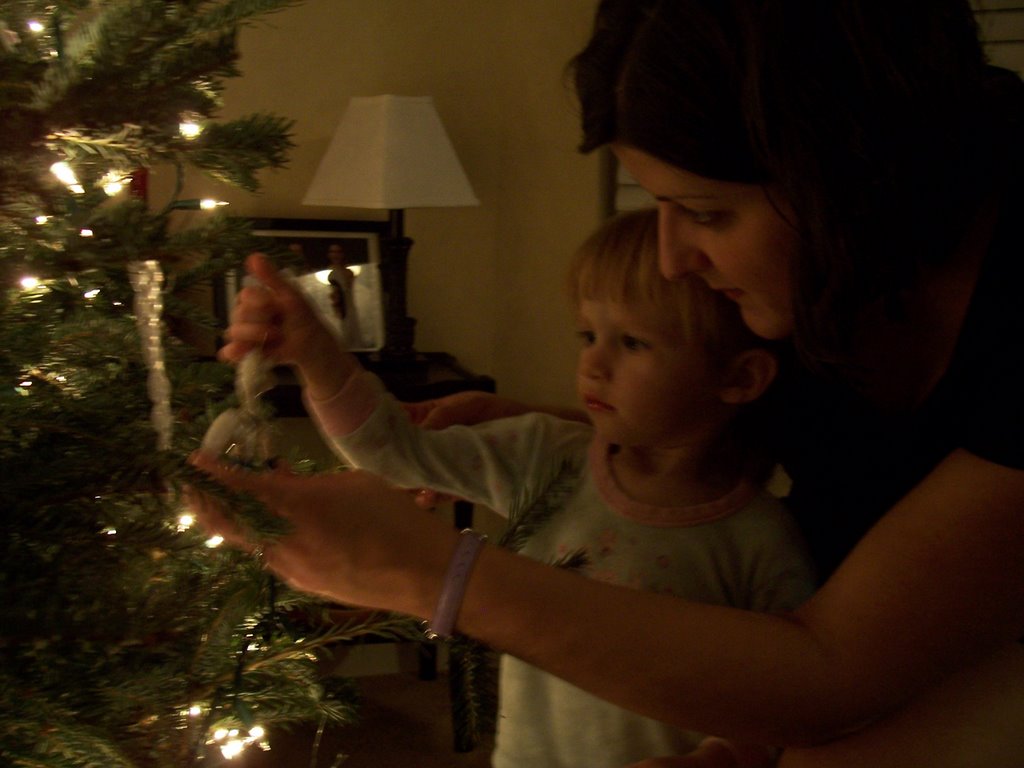
Lights! Tree! Ornaments! Action!


Subscribe to:
Posts (Atom)